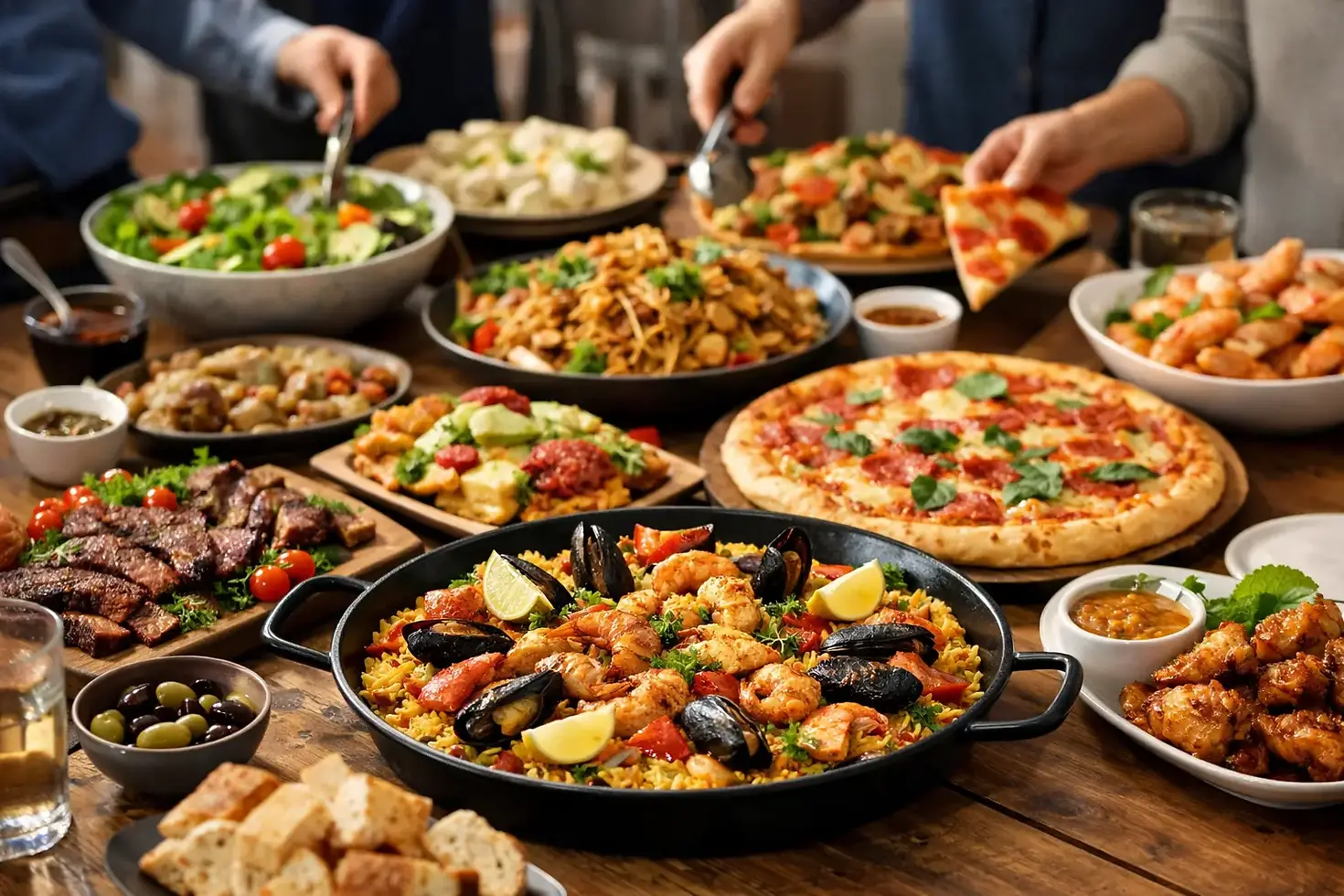
10 Best Dishes for Group Dining
When a table is full of family or friends, the meal needs to do more than taste good. The best dishes for group dining should arrive with colour, aroma and enough variety for everyone to feel looked after. That usually means a spread rather than a single order - dishes that can be shared, mixed, passed around and remembered long after the plates are cleared.
At the heart of South Asian dining is that shared-table feeling. One person reaches for the naan, another spoons out the curry, someone insists you try the grilled piece they ordered, and suddenly the whole meal feels warmer. For groups, that matters. You are not just choosing food. You are choosing pace, mood and how generous the table feels.
What makes the best dishes for group dining?
A good group order has balance. You want one or two dishes with smoky depth from the tandoor, a few curries with different levels of richness, something comforting with rice, and sides that help everyone build their own perfect plate. If every dish tastes similar, the meal can feel flat. If everything is too fiery, half the table may hold back. The strongest group meals have contrast.
Portion style matters too. Dishes that are easy to share work better than meals that feel personal or plated for one. Bone-in selections can be full of flavour, but for a larger group they sometimes slow the table down unless everyone is happy to get hands-on. Boneless curries, mixed grills, rice dishes and breads usually make the easiest centrepieces.
There is also the question of who is at the table. A family meal with children needs a different balance from a birthday gathering or a catch-up with friends who love heat. Group dining is never one-size-fits-all. The right order depends on whether you want comfort, celebration, variety or a little of each.
Start with a tandoori centrepiece
If you want the table to feel lively from the first arrival, tandoori dishes do that beautifully. They bring smoke, char and spice without the heaviness of a sauce-led meal. A mixed grill is often one of the smartest choices for groups because it gives everyone a taste of different textures and marinades in one order.
Chicken tikka works especially well because it is familiar, deeply flavoured and easy to share. Seekh kebabs add a softer, spiced richness, while tandoori chicken brings that classic roasted depth many people look for when ordering for a crowd. If your table includes both adventurous eaters and those who prefer something recognisable, a tandoori selection keeps everyone comfortable.
The advantage here is range. These dishes open the appetite without filling everyone up too quickly, leaving room for curries and sides. For celebratory meals, they also create that generous first impression people remember.
Pick curries with contrast, not repetition
One of the easiest mistakes in a group order is choosing three or four curries that all sit in the same flavour family. A better approach is to think in layers. Choose one rich and creamy dish, one tomato-based favourite, one deeper slow-cooked curry and, if the table enjoys spice, one dish with a little more fire.
A butter chicken or mild korma-style dish often earns its place because it suits many palates. It offers comfort and helps balance spicier choices. Alongside it, a bhuna or karahi dish brings a thicker, more concentrated flavour, with onions, tomatoes and spices cooked down for depth rather than sweetness.
For those who want warmth and intensity, a jalfrezi or madras-style curry can bring energy to the table. The point is not to make everything hot. It is to make sure the group has options. Some diners want richness, others want sharpness, and some want proper chilli heat. A table with contrast keeps everyone engaged.
Choose one signature dish with heritage on the plate
For group meals, it is worth choosing at least one dish that speaks clearly of tradition. This is often the dish people talk about most. In Bangladeshi and Indian cooking, heritage shows up in the layering of spices, the slow building of flavour and the confidence to let the ingredients speak without overcomplication.
That might be a carefully spiced lamb curry, a fish dish with a lighter but more aromatic profile, or a classic house speciality made with spices that carry real character. Authentic cooking has a certain honesty to it. You can taste when a dish has been built from roots rather than approximated for convenience.
At Shurzo's, that sense of heritage comes through in dishes shaped by authentic spices sourced and ground in Bangladesh. For group dining, that matters because a shared meal should feel distinctive, not generic. One memorable signature curry can lift the whole table.
Biryani can anchor the meal
If curries are the heart of a shared spread, biryani is often the dish that gives it weight. For groups, biryani is useful because it can stand proudly on its own while also supporting everything around it. The rice carries fragrance, spice and savoury depth, and it tends to please both adventurous diners and those who prefer something more familiar.
Chicken biryani is often the safest crowd-pleaser. Lamb biryani brings a richer note and suits tables looking for something more indulgent. Vegetable biryani is not just a backup option either - done well, it adds colour, texture and a lighter contrast to heavier meat dishes.
The trade-off is that biryani can be quite filling. If your group wants to sample lots of curries and breads, one biryani to share may be enough. If the meal is meant to be more substantial from the outset, it can become one of the main pillars of the order.
Do not treat sides as an afterthought
A great group meal often depends on what happens around the main dishes. Rice, naan and vegetable sides may not sound dramatic, but they are what make the table work. They stretch the meal, soften spicier dishes and give everyone flexibility.
Pilau rice is usually the best all-round choice because it adds aroma without fighting the curries. Plain rice is useful too, especially if the table includes children or anyone who prefers gentler flavours. With breads, variety helps. Garlic naan, plain naan and perhaps a keema naan can cover different moods around the table.
Then come the supporting dishes that quietly make the meal better. Saag, dhal or a well-made chana dish can add depth for vegetarians and texture for everyone else. These are not filler items. They bring balance, and balance is what turns a large order into a satisfying one.
The best vegetarian dishes for group dining deserve equal billing
A strong group order should never make vegetarian diners feel like they are working around the meal rather than part of it. In South Asian cooking, vegetarian dishes can be some of the most complete and flavourful on the table. They deserve to sit in the centre, not at the edge.
Paneer dishes are excellent for sharing because they offer richness and structure, especially in a mixed group where some people want a meat-free option without giving up that satisfying, savoury feel. A well-spiced vegetable curry or dhal can also provide relief from heavier meat dishes while still feeling generous.
Even groups with no vegetarians at all benefit from adding one or two meat-free dishes. It widens the flavour range and keeps the meal from becoming too dense. That is especially helpful when ordering for longer, more social meals where people want to keep eating comfortably.
How to order well for different kinds of groups
For a family table, aim for comfort and flexibility. Choose one grilled starter, two contrasting curries, one rice dish and mixed breads. Keep the heat moderate, then add one spicier dish only if you know the table will welcome it.
For friends meeting over a long dinner, be bolder. Add a mixed grill, a signature curry, a biryani and a couple of sides that invite sharing. This is where contrast really matters, because people will want to taste across the table.
For celebrations, generosity counts. Bigger groups usually respond well to a spread that looks abundant as well as tastes balanced. More breads, more rice and a proper mix of grilled, sauced and vegetarian dishes help create that feeling. The aim is not excess for its own sake. It is making sure no one feels they have to choose between being polite and taking another spoonful.
A final thought on sharing well
The best group meal is rarely built around a single star dish. It comes from choosing food that invites conversation, passing plates and that familiar moment when everyone says, try this one. When the table has smoke from the grill, depth from the curries, fragrance from the rice and warmth from fresh bread, the meal feels generous in the way good hospitality should.


Comments