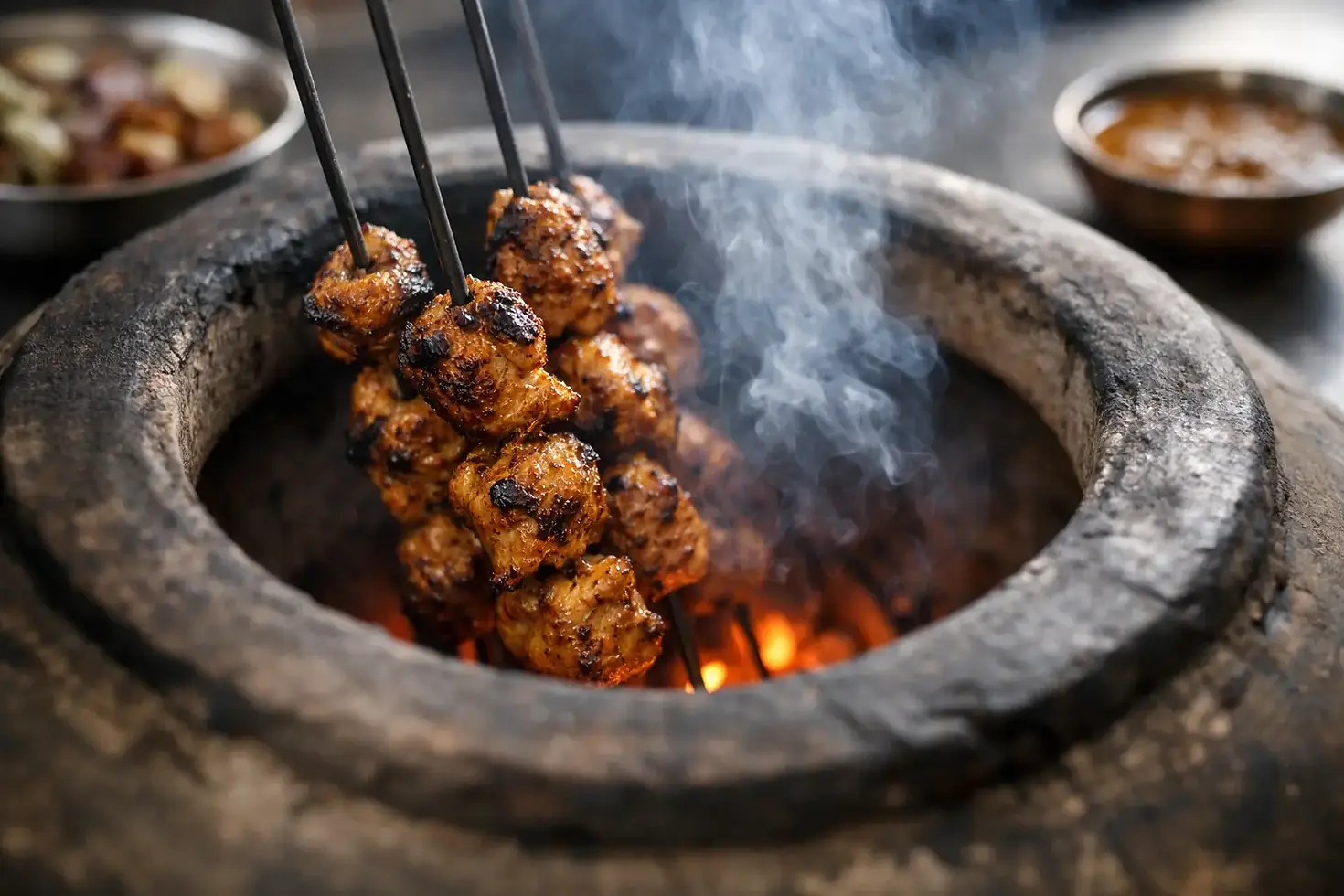
How Tandoor Cooking Creates Smoky Flavour
That first mouthful of a properly cooked tandoori dish has a character that is hard to mistake. The edges are lightly charred, the centre stays juicy, and the aroma carries a deep warmth that feels both rustic and refined. If you have ever wondered how tandoor cooking creates smoky flavour, the answer sits in a mix of fire, clay, time and tradition rather than in any single trick.
A true tandoor does more than cook food quickly. It creates an environment where intense heat, live fuel and enclosed space work together. That is why tandoori chicken, lamb chops, seekh kebabs and naan have a flavour that ordinary ovens and frying pans rarely match. The taste is fuller, the aroma more layered, and the finish has that unmistakable whisper of smoke.
How tandoor cooking creates smoky flavour
At its heart, a tandoor is a clay oven designed to hold very high heat. Traditionally fuelled by charcoal or wood, it builds a cooking chamber where food is exposed to radiant heat from the hot clay walls, direct heat from the fire below, and rising currents of hot air inside the oven. That combination matters.
When marinated meat or dough enters the tandoor, moisture on the surface begins to evaporate quickly. Sugars and proteins react under high heat, creating browning and slight charring. At the same time, the live fuel below releases smoke compounds that circulate within the oven. Because the chamber is enclosed, those aromas do not simply disappear into the air. They cling lightly to the food as it cooks.
This is where the smoky flavour becomes distinctive. It is not the heavy, campfire-style smoke some people expect from barbecue. Tandoor smoke is usually cleaner and more integrated. It sits within the spices, the yoghurt marinade and the natural juices of the meat, giving depth rather than overpowering the dish.
The role of charcoal, clay and fierce heat
The fuel is one of the biggest reasons tandoori cooking tastes the way it does. Charcoal produces steady, intense heat and contributes subtle smoky notes. If the charcoal is well managed, the smoke remains balanced. Too little heat and the food stews instead of searing. Too much uncontrolled flame and the outside burns before the inside cooks properly.
The clay body of the tandoor also plays a huge part. Once heated, the walls retain temperature extremely well and radiate it back onto the food. This creates a fast, dry cooking environment that helps develop those darkened edges people love in tandoori dishes. Those edges are not there for appearance alone. They bring bitterness, sweetness and smoke into one bite.
Because the oven gets so hot, food cooks quickly. That speed is useful. It seals the exterior while helping the interior stay moist. Smoky flavour lands better when the meat is still succulent. Dry meat with char tastes harsh. Juicy meat with char tastes rich and rounded.
Why marinades matter just as much as the fire
People often talk about the oven first, but the marinade deserves equal credit. In Bangladeshi and Indian cooking, marinades are not simply coatings. They are part of the flavour structure.
Yoghurt helps tenderise the meat and creates a surface that browns beautifully in high heat. Spices such as cumin, coriander, chilli, garam masala, turmeric and paprika or Kashmiri chilli bring fragrance and colour. Ginger and garlic add savoury depth. Lemon juice sharpens the profile and helps cut through richness.
When that seasoned coating meets intense heat, it begins to caramelise and char in spots. This is one of the key reasons smoky flavour in tandoori food feels complex rather than flat. You are tasting smoke, but also toasted spice, cooked yoghurt, rendered fat and the slight sweetness that comes from browning.
This is also why two tandoori dishes can taste quite different even when cooked in the same oven. A chicken tikka marinade may produce a lighter, brighter finish, while lamb with more fat can carry a deeper, richer smoky note. The technique is shared, but the result depends on the ingredient.
Smoke is only part of the story
When people ask how tandoor cooking creates smoky flavour, they are often really asking why tandoori food tastes more alive. Smoke is part of it, but texture matters just as much.
A tandoor gives contrast. The outside can become slightly crisp and charred while the inside remains soft. Naan blisters and puffs against the oven wall. Seekh kebabs hold onto juices while picking up dark, roasted edges. That contrast makes the smoky character more noticeable. If everything were soft and uniform, the flavour would seem flatter.
There is also a sensory element. Aroma reaches you before the first bite, and tandoor cooking produces an aroma that feels immediate and memorable. The nose picks up roasted spice and smoke together, so the eating experience starts before the food even touches the plate.
Why home cooking rarely tastes exactly the same
Many home cooks try to recreate tandoori flavour with a grill, standard oven or barbecue. Good results are possible, but there are limits. Most domestic ovens do not reach the same concentrated temperatures as a proper tandoor, and they do not have the same clay chamber or airflow.
A grill can add char, and a barbecue can add smoke, but the balance changes. Barbecue smoke is often heavier and lingers longer. An oven can roast well, but it may miss the quick, fierce contact heat that gives authentic tandoori dishes their signature finish.
That does not mean one method is bad and another is good. It simply means the flavour profile shifts. If you want the true tandoori character, the oven itself is part of the recipe.
The difference between smoky and burnt
There is a fine line between appealing char and unpleasant bitterness. Skilled tandoor cooking depends on judgement. Timing matters, skewer position matters, and the condition of the fire matters.
A little blackening at the edges can be exactly right. It adds contrast and gives the dish personality. Too much blackening, especially without enough moisture in the meat, can dominate the palate and hide the spice blend underneath. Authentic cooking is not about setting food on fire for dramatic effect. It is about controlling heat so the smoke supports the dish.
This balance is one reason heritage cooking deserves respect. Traditional methods survive because they work, but they still rely on experience. The tandoor is not forgiving in the way a low oven can be. It rewards attention.
Why tandoori dishes feel so satisfying
There is also a cultural reason people keep returning to tandoori food. The smoky flavour feels communal. It carries the memory of open fire, shared meals and food cooked with confidence rather than haste. Across Bangladeshi and Indian food traditions, this style of cooking speaks to celebration as much as comfort.
That is why tandoori dishes suit so many moments. They work for a family meal, a relaxed takeaway night, or a larger table where everyone wants something vibrant and generous. The flavour feels special, but it is still grounded and familiar.
At Shurzo's, that sense of heritage matters. Authentic spices, careful marinades and respect for tradition are not extras added for marketing language. They are the foundation of flavour. When tandoori dishes are prepared properly, the smoke is never there to show off. It is there to bring warmth, depth and honesty to every bite.
How tandoor cooking creates smoky flavour in different dishes
The effect changes from dish to dish. Chicken often takes on smoke quickly because of its marinade and cooking time. Lamb can develop a darker, fuller depth thanks to its richness. Fish needs a gentler hand because it cooks fast and can dry out, but when done well it carries smoke beautifully without losing delicacy. Naan is different again, picking up toasted blisters and a faint earthy note from the oven wall itself.
That variety is part of the appeal. The tandoor is one method, but it does not produce one single taste. It gives each ingredient a smoky accent shaped by texture, fat content, marinade and timing.
When you understand that, the flavour becomes easier to appreciate. You are not just tasting smoke. You are tasting clay, charcoal, spice, caramelisation and craft working together in a way that has been valued for generations.
The next time a tandoori dish arrives at the table, take a moment before the first bite. Notice the aroma, the char at the edges and the colour developed by heat and spice. That smoky flavour is not accidental. It is the result of tradition doing exactly what it was designed to do.


Comments