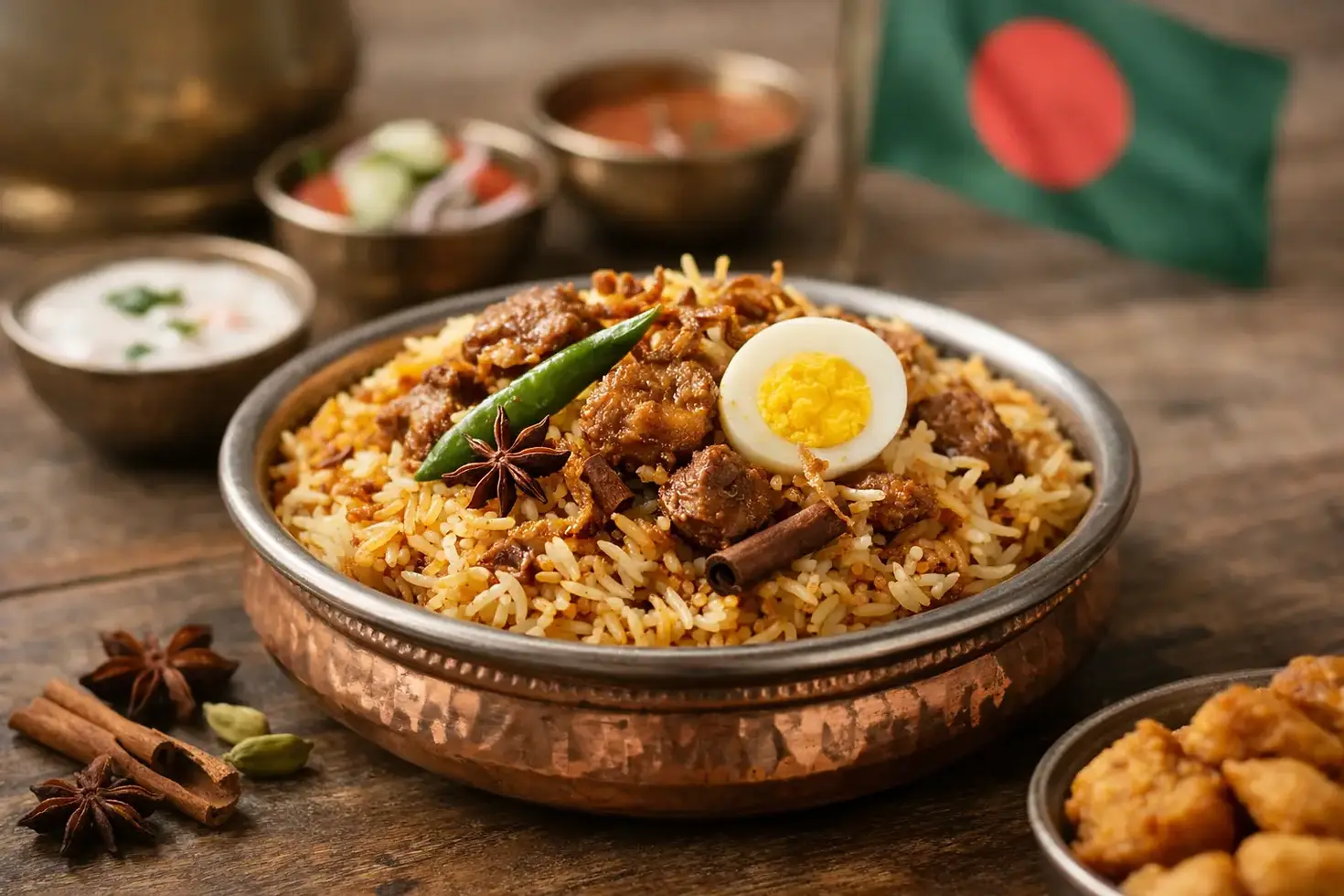
What Is Bangladeshi Biryani?
The first clue is in the aroma. Before the lid is even lifted, Bangladeshi biryani announces itself with warm spice, fragrant rice, slow-cooked meat and the kind of richness that turns a meal into an occasion. If you have ever wondered what is Bangladeshi biryani, the simplest answer is this: it is a deeply rooted rice dish built on heritage, balance and generosity, with regional styles that carry the story of Bangladesh onto the plate.
That answer, though, only scratches the surface. Bangladeshi biryani is not one fixed recipe. It is a family of dishes, shaped by Mughal influence, local ingredients, festive cooking and the tastes of different cities and households. What ties it together is a love of layered flavour - never flat, never careless, and never reduced to just "rice with curry mixed in".
What is Bangladeshi biryani made to be?
At its heart, Bangladeshi biryani is a layered rice dish where basmati or fragrant long-grain rice is cooked with marinated meat, ghee, fried onions and whole spices such as cardamom, cinnamon, clove and bay leaf. Depending on the style, it may also include potatoes, yoghurt, kewra water, saffron or a touch of rose water. The goal is not simply heat. It is perfume, depth and richness, with each grain carrying flavour while still keeping its own texture.
This is where many people are surprised. Bangladeshi food is often unfairly treated as a footnote to broader "Indian curry" culture, when in reality it has its own regional identity and cooking logic. In biryani, that identity shows up in the handling of spice, the use of fat, the tenderness of the meat and the importance of aroma as much as fire.
A good Bangladeshi biryani should feel generous but not heavy for the sake of it. The rice should not be greasy, the meat should not be dry, and the spice should not shout over everything else. It should taste celebratory, even if you are eating it on an ordinary evening.
The styles that define Bangladeshi biryani
When people ask what is Bangladeshi biryani, they are often really asking which version they mean. In Bangladesh, several styles are well known, and each has its own place in everyday food culture and special occasions.
Kacchi biryani
Kacchi biryani is perhaps the most iconic. The word kacchi refers to the meat going in raw after marination, usually mutton or goat, before it cooks slowly with partially cooked rice. This method gives the dish a deep, rounded flavour because the meat juices rise into the rice as everything cooks together.
Kacchi biryani is often associated with weddings, Eid gatherings and big family celebrations. It tends to be rich, fragrant and luxurious, with soft potatoes, tender meat and beautifully scented rice. It is not the kind of dish that is rushed. Done properly, it asks for patience.
Tehari
Tehari is another beloved Bangladeshi rice dish and sits close to biryani, though many people treat it as its own category. Traditionally made with beef, tehari is usually a little simpler and more direct in flavour than kacchi biryani, with the meat and rice cooked together in a way that creates a warmly spiced, satisfying finish.
If kacchi is the grand celebration, tehari can feel more like the treasured comfort dish - still special, still layered, but often less floral and less ceremonial. That does not make it lesser. It simply speaks in a different voice.
Morog polao
Morog polao, made with chicken, occupies another important corner of Bangladeshi food culture. Technically, some would place it beside biryani rather than inside the category, but in practice it often comes up in the same conversation because it shares that festive rice-and-meat identity. It is usually gentler, sweeter in aroma and lighter in spice, making it a favourite for family meals and guests who want fragrance without too much intensity.
This is where definitions can blur. In South Asian cooking, the boundaries between biryani, polao and tehari are not always rigid. Names matter, but so do tradition, region and family habit.
What makes Bangladeshi biryani different?
People often compare biryanis across the subcontinent, and that is natural. Hyderabad has its own style. Kolkata has its own style. So does Lucknow. Bangladeshi biryani belongs in that wider story, but it has a character of its own.
One defining feature is the balance between richness and aroma. Bangladeshi biryani often leans into ghee, fried onions and layered perfume from kewra or similar floral notes, yet it still aims for harmony rather than overload. Another is the role of potatoes, especially in kacchi biryani, where a properly cooked potato is not filler but a prized part of the dish.
There is also a distinct relationship with meat. In Bangladesh, beef holds an important place in many beloved dishes, which is why tehari and related rice dishes carry a different everyday resonance than in some other regional traditions. That local preference shapes the biryani conversation.
Then there is the emotional side. Bangladeshi biryani is closely tied to gatherings - weddings, family visits, Friday meals, Eid tables and moments when food is expected to show care. It is a dish of hospitality. You do not serve it meanly.
What is Bangladeshi biryani supposed to taste like?
Fragrant first, then savoury, then rich. That is often the journey.
You should notice whole spices, but they should not dominate. The fried onions bring sweetness and depth. The meat should be properly seasoned all the way through, not just coated on the outside. The rice should carry stock, spice and fat, but still stay separate enough to give the dish lightness.
In a strong version, each mouthful changes slightly. One bite might bring tender mutton, another the softness of potato, another the sweetness of browned onion. That variety is part of the pleasure.
It also depends on who is cooking. Some kitchens make biryani spicier, some more aromatic, some richer with ghee, some cleaner and lighter. Authenticity does not mean every pot tastes identical. It means the dish respects its roots.
Why the cooking method matters
Biryani is as much about technique as ingredients. The layering matters. The marination matters. The timing matters. Even the final resting time matters.
For dishes like kacchi biryani, the traditional dum method - sealing the pot so the food cooks in its own steam - is especially important. That slow finish allows the rice to absorb the flavour of the meat and spices without turning mushy. It is one reason biryani made with care tastes so different from hurried versions.
This is also why biryani can be disappointing when corners are cut. If the rice is overcooked, the dish loses elegance. If the meat is under-marinated, the flavour sits on the surface. If the spice blend is careless, everything becomes muddy. A proper biryani should feel composed, not chaotic.
Bangladeshi biryani in London
In London, biryani is everywhere, but not every biryani tells the same story. For diners who want a more rooted experience, Bangladeshi biryani offers something more specific than a generic takeaway staple. It brings regional identity, memory and craft into a dish many people think they already know.
That matters for Bangladeshi families looking for familiar flavours, but it also matters for curious local diners. When a restaurant takes pride in authentic spice sourcing, traditional methods and heritage-led recipes, biryani stops being just a menu category and becomes a way into a culture. At Shurzo's, that spirit is part of the welcome.
There is also a practical truth here. Biryani suits many occasions. It works for a relaxed dinner, a family takeaway, a gathering with friends or a larger celebration. Few dishes feel as generous to share, yet still satisfying to keep all to yourself.
How to recognise a good Bangladeshi biryani
A good one does not need gimmicks. The rice should be distinct and fragrant. The meat should be tender enough to pull apart easily. The seasoning should feel deep rather than loud. You should be able to taste the spice without feeling buried under chilli.
Look for balance. Too dry, and it loses comfort. Too wet, and it loses structure. Too much perfume, and it becomes soapy. Too little, and it tastes flat. The best versions sit right in the middle - confident, aromatic and generous.
It is also worth paying attention to portion and presentation. Bangladeshi biryani is traditionally abundant. It should feel like proper hospitality, not an afterthought in a tray.
For anyone still asking what is Bangladeshi biryani, perhaps the best answer is this: it is a dish that carries celebration into everyday life, built from rice, spice, patience and pride. Try it with an open mind, and you will taste far more than a recipe.


Comments